Managing Dust on Shooting Gear After a Dry Arizona Range Day
It's comfortable to go on a range trip in dry desert air. However, fine grit can follow cases, clothing, optics, magazines, and even a firearm home. Removing visible dirt is not the same as cleaning fine grit, and deciding what…
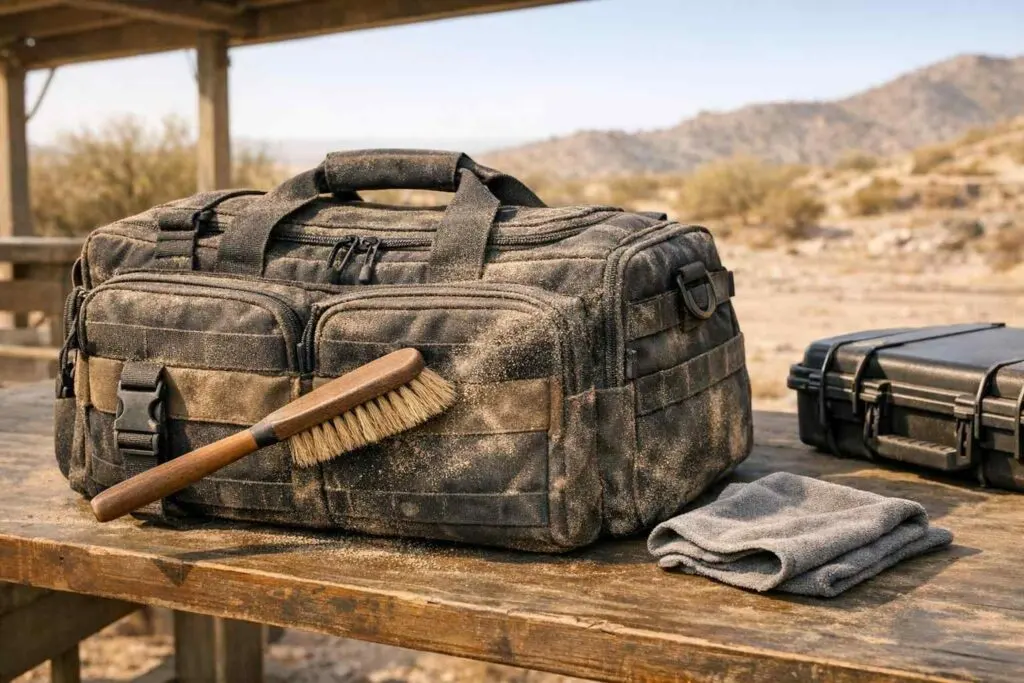
It's comfortable to go on a range trip in dry desert air. However, fine grit can follow cases, clothing, optics, magazines, and even a firearm home. Removing visible dirt is not the same as cleaning fine grit, and deciding what needs to be cleaned immediately and what can wait, as well as choosing the right cleaning method to prevent further pushing of dirt into working parts, is essential to protecting your equipment, facilitating reliable use, and preventing normal dust from becoming an expensive repair or even safety problem.
Start with a safe separation routine
Move to a safe area to begin cleaning a firearm. Unload the firearm in a safe and systematic manner. Keep the muzzle of the firearm in the safe direction that it was originally pointed. Make sure all ammunition, including that in magazines and cases, is removed from the firearm and placed in a safe location away from cleaning supplies and the firearm itself.
Wait a few minutes to safely pack up your gear, then find a safe place to unload your firearm. Take a few minutes to organize your cases, magazines, loose ammo, tools, and cleaning supplies. Then sort through your gear in a safe and controlled environment to begin cleaning.
A dusty case or bag is usually nothing more than a nuisance. However, dust accumulating around operating parts, openings, or in ammunition storage areas can be a major problem. If the item in question appears to be damaged, excessively gritty, blocked by debris or otherwise appears different than normal, cease all attempts to clean and refer to the owner's manual or a gunsmith for proper repair.
Decide what needs attention first
Dusty items should not be treated equally. First, categorize all your range gear into three groups: Items that come into contact with your gun; Ammunition and the cases, pouches, etc. that carry it; and General Range Gear (i.e. Targets, Range Lights, etc.).
First clean firearms, magazines, scopes and other bore-related tools. Look for signs of powder residue mixing with dirt, and for debris accumulating in the crevices between moving parts. When cleaning, never use compressed air in unknown openings. Use only the recommended cleaning tools and gun cleaning products, and ensure the gun is always pointed in a safe direction.
Magazine bodies, pouches, and other containers for ammunition also will have a layer of fine grit on them. Clean the outside of the case and inspect for damage. Questionable ammunition should be stored, not cleaned for later use. Clean the cases in the same manner as one would clean any gear and then store them in appropriate containers in accordance with the manufacturer's recommendations as well as any local laws and regulations for storage and disposal of ammunition.
Range gear like a folding shooting mat, gun case, gun bag, bags for range accessories, eye wear, hearing protection and tripods can be cleaned with a dry brush or a soft cloth that has been lightly dampened. Make sure to allow time for any gear with fabric or padded components to fully dry before storing.
Choose cleaning tools that match the debris
Most firearms can be cleaned using a soft brush, a clean lint-free cloth and the lubrication points, cleaning materials and disassembly for cleaning as described in the owner's manual. Remember that more lubrication does not necessarily mean better. In fact, excess oil can actually attract dust and create a sticky film on surfaces that are to be protected from corrosion. Use only the recommended cleaning materials and follow the owner's manual for disassembly for cleaning as well as reassembly.
The best firearm cleaning agents are those specifically designed for this purpose. Other household agents can be very damaging to a firearm. There are special solvents, and "scrubbers" and "scraper" type cleaning tools as well, but these must be used with caution. And never, ever use an sharp pointed object (e.g. the point of a screwdriver) to scrape out a stubborn patch of dirt or grime. You can't tell if you're cleaning out dirt or damaging the gun.
In terms of tools to take to the range, there is a difference between a field cleaning kit that one can carry and a full home cleaning kit. The field kit is used for minor, obvious cleaning at the range. After returning home, one then takes a full, home cleaning kit, out in the garage, with good lights, plenty of room, and all reference material needed, for a complete and thorough disassembly and cleaning for inspection. If unsure as to how to disassemble, etc., then consult a gunsmith for best and safest results.
Reconsider the gear that collects grit
Maintenance of your shooting gear is also part of your buying decision. Some gear collects dust better than others. Open weave bags, exposed fasteners, deep sewn fabric pockets and lots of complicated accessories can collect a lot of dust. In some cases this will mean more cleaning time, but often it is just an inconvenience. The gear needs to have enough convenience, capacity and comfort that you will use it.
For carrying gear after a desert shooting session, look for storage containers and gear bags that can be opened completely for fast inspection, then be put into household storage until cleaned. Containers with removable liners, washable shooting mats, covered containers and simple cases that do not have too many gadgets and accessories all have their merits for fast and easy routine cleaning of gear. A good range bag will keep all your dirty shooting gear separated from your other gear and prevent getting your dirty gloves, targets and other accessories mixed up with your clean gear that you will need for the next trip to the range.
Tools are bought primarily for their intended use and one must look for compatibility, safe fit, durable construction and clear instructions for use from the manufacturer. Most importantly, the tool must be used correctly and consistently. Accessories are bought to make easier work of cleaning but do not look to add to an arsenal of specialized tools that will collect dust in a corner of the gun cabinet.
Store equipment only after the final check
After completing the cleaning of your firearm(s) for desert shooting, check for loose particles such as brush fibers, or even parts of the cleaning cloth, before storing the gear. Ensure that the firearm(s) are stored in the same configuration as described by the manufacturer for storage. Remember to store ammunition in a separate and secure location as described by current laws and from official sources.
Cases and gear storage containers should not be closed up while wet or dirty. While it may appear to be clean after a 'dry' day on the range, it can create new problems when stored. Clean gear should be stored separately from dirty gear to be cleaned later.
Record any items that appear to be stiff, or in disrepair, such as damaged magazines or scratched optics. Note if a part is missing. These items need to be addressed. But, remember that responsible firearm ownership does not have to be complicated. Simply making sure that you have done enough to ensure that you have handled your firearm safely, is enough.